Prolapse
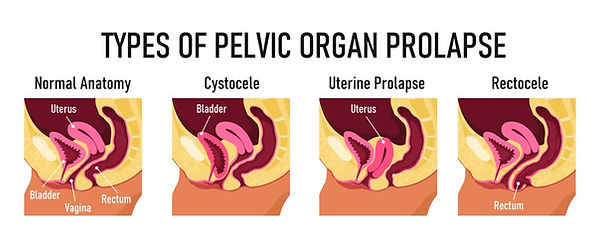
Pelvic Organ Prolapse (POP) is a common condition where one or more pelvic organs - like the bladder, uterus,
or rectum - drop from their normal position and bulge into the vagina (the birth canal). This happens because
the pelvic floor muscles, ligaments, and tissues that hold them in place become stretched or weakened.
Key Causes & Symptoms
The single biggest risk factor is pregnancy and vaginal childbirth. Other factors include aging (especially after
menopause), chronic straining from constipation or coughing, obesity, and repetitive heavy lifting.
Symptoms can range from mild to severe, but often include a feeling of heaviness or dragging in the vagina,
a sensation of vaginal bulging or a lump you can feel or see and difficulties with bladder or bowel control
(like urinary leakage or incomplete emptying).
Some Common Prolapse
1. Cystocele - a prolapse of the bladder into the front wall of the vagina
2. Rectocele - a prolapse of the rectum into the back wall of the vagina
3. Uterine Prolapse - the uterus drops down in the vagina
4. Vaginal Vault Prolapse - may occur after a hysterectomy when the top of the vagina drops down into the vaginal canal
Treatment Options
It is important to have your pelvic floor muscles checked by an expert e.g. a specialised Pelvic Floor Physiotherapist. They can assist you in identifying the type and stage of prolapse you have and create a plan in moving forward to improve pelvic floor functionality.
Treatment depends on the severity and symptoms. Mild cases can often be managed with lifestyle changes (like weight management and avoiding heavy lifting) and pelvic floor muscle exercises.
Some may require further medical intervention such as a pessary. A pessary is a silicone device which is fitted into the vagina. It provides inside support to your organs. Some may require surgery.